Requirement before quotation
We establish the vehicle, the seating position, the mounting arrangement and the actual fault before proposing a part or a price. A quotation issued without those is a guess wearing a number.
There is no shortage of places to buy a seat belt. What is harder to find is somebody who will establish what your vehicle actually needs before quoting you a price on it. That is the whole proposition, and everything below is a consequence of it.
A part that has to be returned was never cheaper than the conversation that would have prevented it.
Wrong-part returns cost time on both sides, delay a vehicle that is off the road, and in restraint supply they carry a risk that a marginally-wrong component gets fitted anyway because it went in. We would rather spend the extra exchange at the start.
Each of these describes something we do, not a quality we assert. If any of it stops being true of an enquiry you send us, it is fair to hold us to it.
We establish the vehicle, the seating position, the mounting arrangement and the actual fault before proposing a part or a price. A quotation issued without those is a guess wearing a number.
A rear-bench belt in a hatchback, a multi-driver commercial cabin and a coach seating row are three different problems. We treat the duty cycle and environment as part of the specification, not background detail.
Tongue plate profile against buckle throat, retractor type and mounting, webbing length, anchorage spacing and bolt specification — checked against your vehicle rather than inferred from a model name.
If a part is not available, not suitable, or the sensible answer is for your workshop to inspect the vehicle first, we will say that. We do not supply the nearest approximation and let you discover the difference.
Once a specification is settled for a vehicle type, reordering is a matter of quantity and timing. Operators running several identical vehicles should not have to repeat the identification exercise each time.
Questions about routing, fitment or what to check before ordering are part of the job. So is telling you when something falls outside what we can properly advise on.
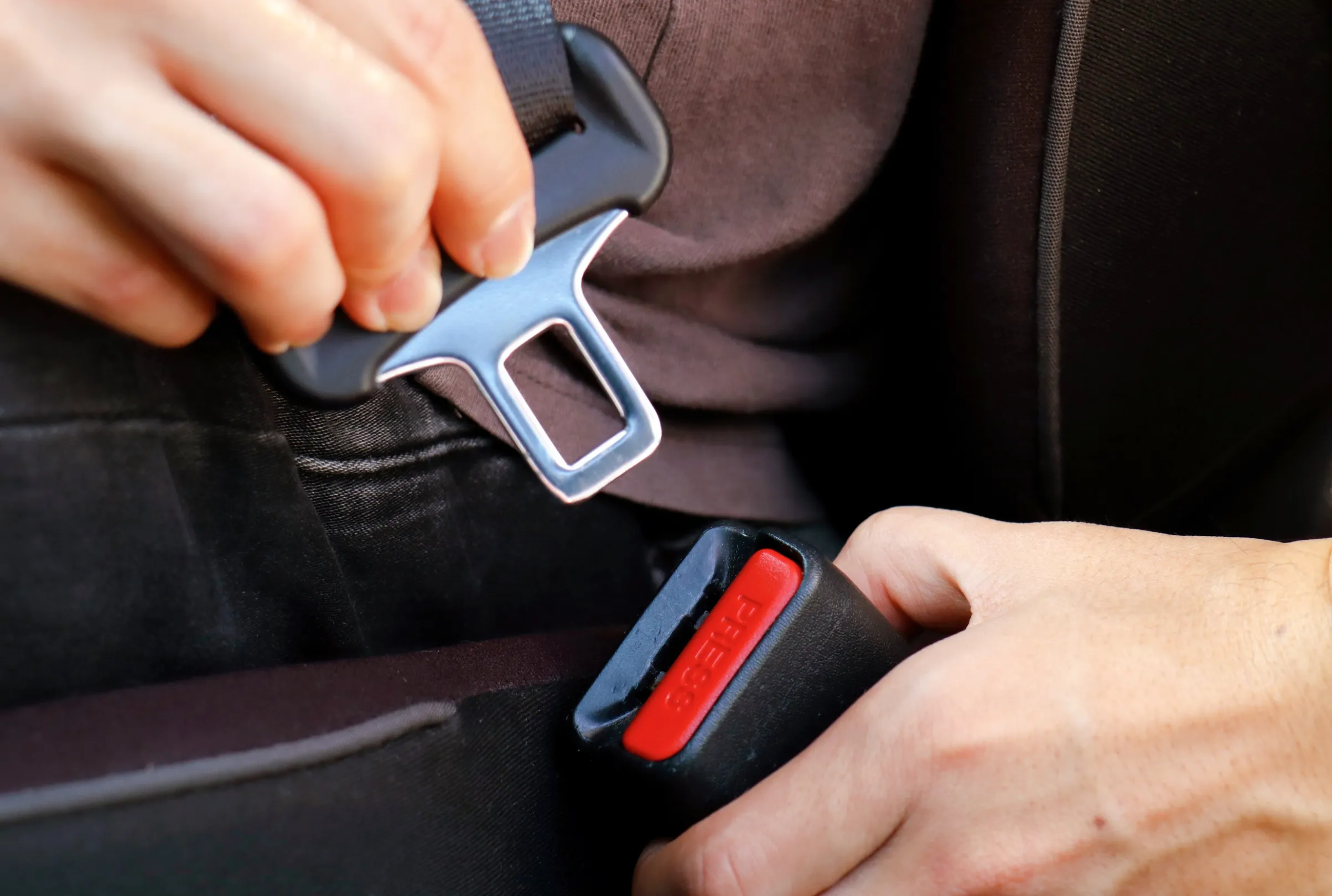
Seat belts are one of those components where visual similarity is actively misleading. Two tongue plates can be the same width and thickness and still differ in the position of the aperture that the buckle's catch engages. Two retractors can bolt to the same hole pattern and behave differently under load. Two belts can be identical except for two hundred millimetres of webbing.
None of those differences announce themselves in a photograph of the part on its own. They show up at installation, or — worse — later, in service. So the checks we run are on the specifics, and the questions we ask are the ones that surface them.
No. We are a trading and supply business. We do not manufacture seat belts or restraint components, and we do not present ourselves as doing so. What we bring is product knowledge and the discipline of matching a requirement to the correct part.
We can narrow a requirement to a definite recommendation using the vehicle details, the mounting arrangement and photographs of the existing installation. What we cannot do is inspect your vehicle remotely, and some vehicles have been modified, re-bodied or previously repaired in ways that are not visible in a photograph.
So the honest answer is that we work to eliminate guesswork, and we ask the fitting workshop to confirm the physical fit before installation. If something we have supplied turns out not to suit the application, tell us and we will work through it with you.
We do not publish certifications, approvals or test results on this website, because we will not display anything we cannot evidence on request. If a particular enquiry has documentation requirements, raise them at the outset and we will tell you plainly what can and cannot be provided for that product.
Because a price attached to "seat belt" is not information. What a given requirement costs depends on the vehicle, the configuration, whether a complete assembly or an individual component is appropriate, and the quantity involved. Publishing a figure that changes the moment we know your vehicle would waste your time.
No. Restraint installation should be carried out by a qualified workshop working to the vehicle manufacturer's procedure, including the correct bolt specification, spacers and torque figures. Anchorage integrity is part of the safety function of the system, and it is not a job to improvise.
No. A single replacement belt for one vehicle is a normal enquiry and gets the same questions as a fleet requirement. The identification work is the same either way — only the quantity changes.

For a single vehicle, our approach costs you one extra exchange of messages. Across a fleet it compounds into something more useful: a set of settled specifications you can reorder against, and a supplier who already knows what your vehicles take.
The fastest way to find out whether this is how we actually work is to give us a vehicle and a problem, and see what comes back.